
03/24/2026
Build Handwriting Skills for Pre-K Kids While Having Fun!
When it’s time for children to learn how to write, teaching them doesn’t have to be a challenge. There are many fun ways to support the development of handwriting skills for our kids. Handwriting skills aren’t always something that comes automatically but rather is a culmination of many foundational skills that develop over time. It is important to support foundational fine motor development in order to set the child up for future handwriting success.
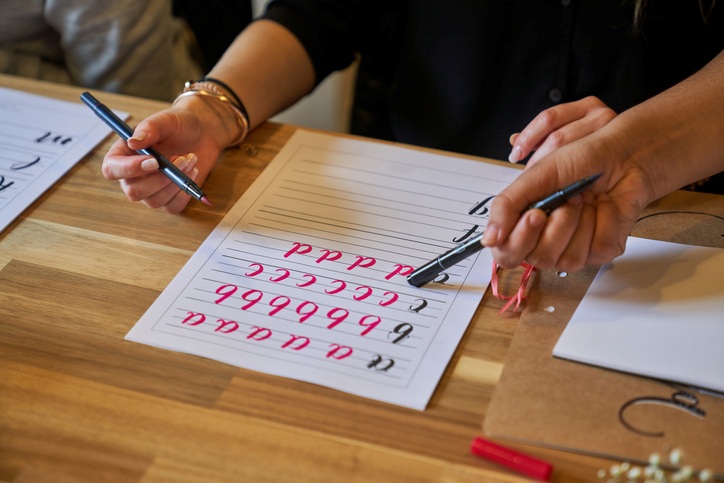
What are Writing Readiness/Prewriting Skills?
What do we mean by “prewriting” skills? Prewriting skills are the foundational abilities children develop before formal handwriting. These skills help children explore scribbling, drawing, and eventually writing in ways that feel successful and comfortable.
Several underlying skills support writing readiness, including fine motor strength, finger dexterity, visual-motor integration, and visual-perceptual skills. Together, these abilities help children learn how to hold and control a writing utensil, move it smoothly across the page, and understand how shapes, lines, and curves can come together to form pictures, symbols, and eventually letters.
As these skills develop, children become better able to hold and adjust a pencil or crayon in their hand, use the right amount of pressure when drawing or writing, coordinate what their eyes see with how their hands move, and combine simple shapes and lines to create drawings, letters and words.
Why are These Skills Important?
Pre-writing and writing readiness skills are essential because they are the building blocks as they move towards more complex drawing and handwriting tasks.
What are the Foundations/Building Blocks for Effective Handwriting?
- Core/Shoulder Strength
Our postural muscles help stabilize and ground our bodies; it is important to have postural stability in order to develop distal dexterity skills. Some ways to build core/shoulder strength are by weight bearing activities such as animal walks or wall push-ups, or engaging in activities in the prone position. - Hand/Finger Strength
Our hands are made of many small muscles that work together to support writing development. Activities like using a hole punch, cutting with scissors, playing with Play-Doh and putty, and building with blocks, Legos and other fine motor toys are great ways to promote hand and finger strength. - Dexterity and Separation Side of Hand
One of the most crucial prewriting skills is developing dexterity and the separation of the sides of the hand. When developed, it enables children to control their fingers individually. This is a refinement of their fine motor skills and helps them develop the skills they need to hold a pencil effectively. Using tweezers, spinning tops, translating items from palm to fingertips, or playing games with small pieces are some great ways to support the development of these skills. - Crossing Midline
One essential skill that children must learn for prewriting is called crossing midline. This is a skill that teaches children to use separate sides of their bodies and brain together. Some ways to teach crossing the midline to children are playing Simon Says, passing a ball back and forth (left to right), and playing rhythmic games like tapping or clapping. - Eye-Hand Coordination
Eye-hand coordination is the ability to process what you are seeing and move your hand/body in accordance to that information so you can complete the task you are working on. We use eye-hand coordination skills with many activities every day. Placing coins in a piggy bank, filling up cups with water, stringing beads and various catch/throw games are great ways to develop eye-hand coordination skills. - Bilateral Integration
This skill enables children to use both hands and both sides of the body simultaneously and in a controlled way. This way, a child can hold a pencil with one hand and hold the paper still with the other hand or hold the paper while cutting. It is a critical skill to develop before writing can begin. Rolling Play-Doh, building with magnatiles, pulling apart/connecting resistive toys are excellent ways to promote bilateral integration skills. - Visual Perception
Visual perception is the ability to see and interpret visual information. Visual perceptual skills are essential for letter recognition and future reading. It is also what helps us be able to find items in a cluttered space like in our backpack or desk. Activities like shape sorters, hidden pictures, search and find, matching games, and puzzles are great ways to develop visual perceptual skills. - Tactile Discrimination
This skill involves being able to discern what something is through touch alone, without visual perception at all. Through tactile discrimination, children can determine how much pressure to use with a pencil or find something in their pocket without looking. Tactile discrimination skills help improve precision and legibility with writing. Engaging in tactile activities such as sensory bins, drawing letters in salt trays or shaving cream, and finger paint are great ways to develop tactile discrimination.
Fun Activities that Develop Writing Readiness Skills
- Crafts that Include Tearing/Crumpling/Folding Paper
Squeezing, ripping, and folding paper helps to build hand strength. Crafts that involve this can be very motivating for kids! - Spray Bottle/Hand Strengthening Fine Motor Games
Specific tasks like using a spray bottle will strengthen smaller muscles of hands. Other tools, such as tweezers, child safety scissors, and paintbrushes, can provide ways to build fine motor strength. - House Chores and Activities
Activities such as garden work, pushing a vacuum, and wiping off tables can help children learn to use their hands. These activities will strengthen shoulders, arms, and hands. Assisting with cooking and baking also works on many fine motor skills. This will make learning how to write much more manageable. - Sensory Bins
Create a sensory bin. From rice to pebbles to beans to shaving cream, there are many types of items you can place in bins to stimulate a child’s sensory perception. Playing with and handling these items will help a child develop writing skills. - Putty/Playdoh, and Many more!
When children squeeze resistive mediums like Play-Doh, putty and/or stress balls they strengthen the small muscles in their hands needed to develop fine motor skills needed for writing skills. - Stickers
Stickers can be super motivating for kids. Peeling stickers off a paper and carefully placing them somewhere else is an activity that supports the development of pincer grasp, separation side of hand and webspace development. These are all essential skills for fine motor and handwriting success.
South Shore Therapies
As the premier therapy practice in Massachusetts, the therapists at South Shore Therapies can answer all the questions you might have regarding prewriting and helping your young child develop the skills they need to begin writing. We are the leaders in occupational therapy, speech therapy, and feeding therapy. We cultivate a nurturing relationship with our patients and design a calm, organized environment designed to motivate patients and their families. For more information, visit our website, sign up for intake, or inquire about our in-home/community services today.